PI
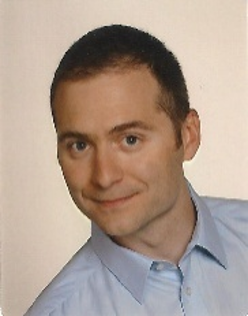
Khurram Shehzad
Dr. Khurram Shehzad is a University Professor at the Silesian University of Technology, Poland. His interdisciplinary research bridges materials science, semiconductor devices, optoelectronics, advanced sensing and intelligent systems. His work focuses on translating emerging materials into practical technologies for imaging, healthcare, robotics, environmental monitoring and security.
His principal research interests include two-dimensional materials, graphene–silicon and black-phosphorus–silicon photodetectors, lead-free perovskite X-ray detectors, flexible and wearable sensors, neuromorphic optoelectronics, and edge-intelligent imaging systems. His group develops the complete technology chain—from material synthesis and interface engineering to device fabrication, characterization, system integration and application-oriented validation.
Dr. Shehzad has led and contributed to internationally funded research projects supported by the National Science Centre Poland, TÜBİTAK, the National Natural Science Foundation of China and other major funding agencies. His projects have addressed infrared photodetection, graphene-based optoelectronics, wafer-scale device manufacturing and environmentally sustainable radiation detectors.
He has published more than 80 research articles in internationally recognised journals, including Nature Nanotechnology, Nature Electronics, Nature Photonics, Advanced Materials and Chemical Society Reviews, attracting over 4,000 citations. He is also the author of the Wiley monograph Graphene for Post-Moore Silicon Optoelectronics.
Dr. Shehzad is a Fellow of the Institute of Physics and the Institute of Materials, Minerals & Mining, as well as a Senior Member of IEEE. He serves as an Associate Editor of Applied Nanoscience and has supervised PhD students, master’s researchers and postdoctoral fellows from diverse international backgrounds.
His research vision—“AI for Devices, Devices for AI”—combines intelligent data processing with next-generation sensing hardware. Through international collaboration and technology translation, he aims to develop high-performance, scalable and environmentally responsible devices capable of addressing real-world scientific and societal challenges.